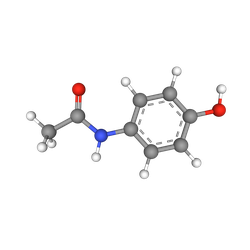
Acetaminophen
Also known as: Paracetamol, Tylenol, Panadol, Acetaminophenum
Acetaminophen, also known as paracetamol, is a prevalent over-the-counter medication widely used to relieve pain and reduce fever. It is a go-to option for many individuals seeking relief from common ailments such as headaches, muscle aches, and colds. Acetaminophen achieves its effects by inhibiting the production of prostaglandins in the brain—these are chemicals responsible for transmitting pain signals and inducing fever. This mechanism makes acetaminophen an effective choice for addressing mild to moderate discomfort, with a relatively low profile of side effects when it's used as recomme...
Potential Side Effects
Side effects score: 6; Acetaminophen is generally safe when used as directed, but potential side effects include liver damage, allergic reactions, and gastrointestinal issues. It is important to avoid overdose, as it can lead to serious complications, such as liver failure, which may be life-threatening.
Health Categories
View efficacy ratings for Acetaminophen across multiple health categories.
Research & Evidence
Our efficacy ratings are based on scientific research and clinical studies.
Related Supplements
Supplements commonly explored alongside Acetaminophen